Why Can’t We Be Friends?
The closer Strategy and Creative work together, the stronger the foundation we can build.
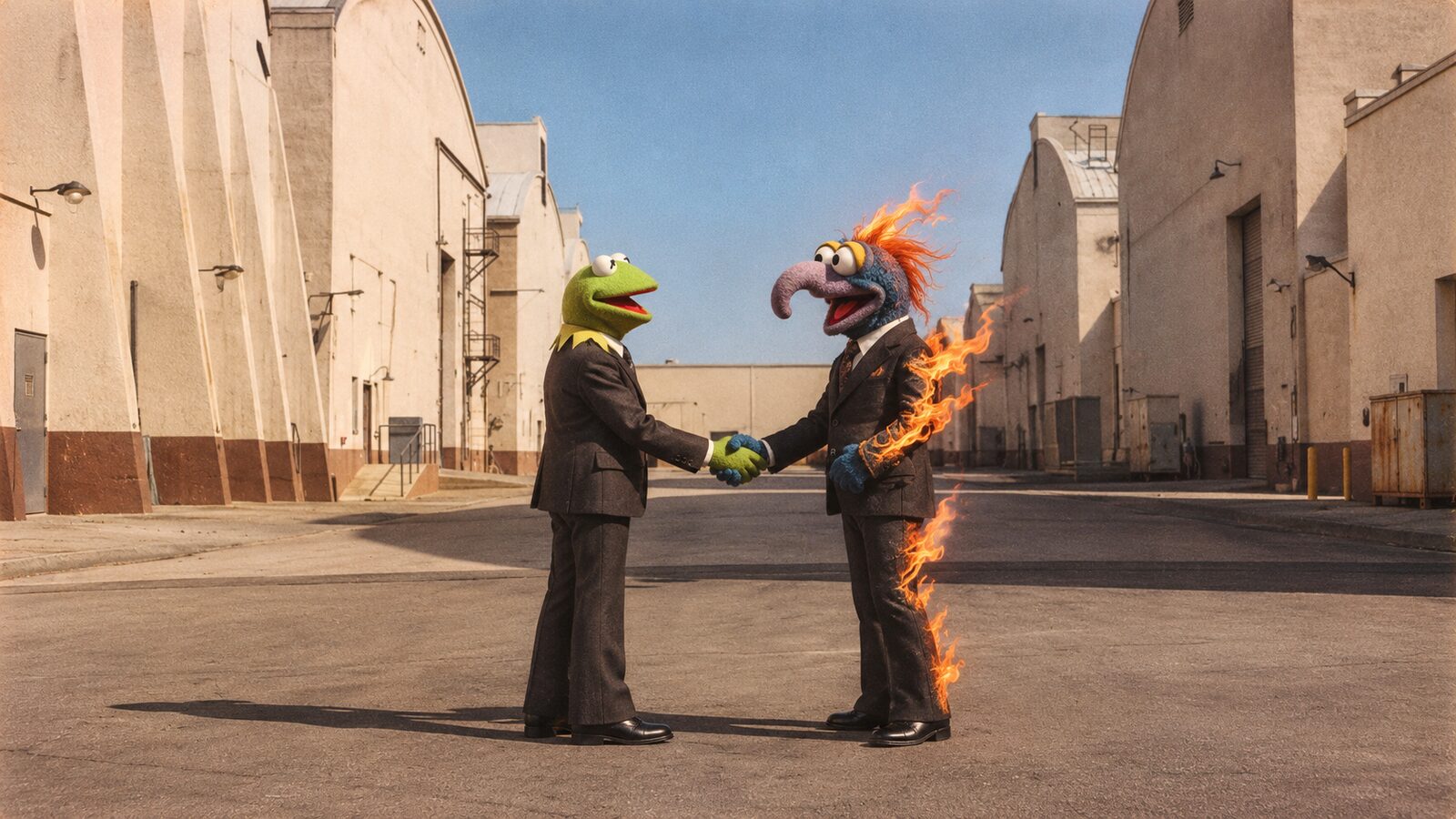
Strategy and Creative, it’s the age-old love / hate relationship.
Strategy tends to think creatives are self-indulgent, basing ideas on taste rather than understanding, and just magpie-ing the latest meme off TikTok in place of really thinking about the audience and the brand.
Creative feels strategists are just there to get in their way and police their creativity.
In reality neither of these things are true.
In the 30-plus years I’ve been doing this, across content agencies, media agencies, digital agencies, experiential agencies and production companies, the best work has always had something in common. Knowledge, understanding and some properly robust thinking behind it.
And the best strategists I’ve worked with have understood how to turn that thinking into something that gets creatives excited.
Dani wrote about where that thinking starts in her recent piece, “Houston, We Need a Problem”. Before we start coming up with answers, we need to understand what we’re actually trying to solve.
That sounds obvious. But a brief asking for a campaign, more content or a new brand film can get everyone thinking about the output before they’ve properly questioned the problem behind it.
What matters to the people we’re trying to reach? What’s getting in the way? What does that mean for the business? And where does the brand have a credible role?
This is where working together makes a difference. Strategy helps us explore those questions. Creative thinking helps us challenge the answers and discover possibilities we might otherwise miss. An idea can expose an assumption that doesn’t hold up. A strategic observation can give a promising thought the substance it needs to become something much bigger.
Those conversations can change our understanding of the problem as well as the answer.
Strategy helps us explore those questions. Creative thinking helps us challenge the answers and discover possibilities we might otherwise miss.
What Dani and I have learned is that the closer Strategy and Creative work at this stage, the stronger the foundation we can build.
For us, that foundation is a creative platform. A clear organising idea rooted in the problem we’re solving, with enough substance to give the work direction and enough creative possibility to keep inspiring new ideas.
That platform can become the bedrock for always-on content and specific campaigns. It gives internal teams and agency partners a shared understanding of what the work needs to achieve, why the idea makes sense and where they can take it.
KFC: Believe in Chicken
Look at KFC’s “Believe in Chicken”, launched by Mother in June 2024.
KFC and Mother were exploring a new direction to reconnect with younger audiences. During an early creative review, an image of chicken with the word “Believe” caught the team’s attention.
Mother’s head of strategy, Neasa McGuinness, describes what followed:
“We got obsessed by this one word, everyone talking about what it could mean and the power it could hold.”
Research explored the territory around belief, trust and reliability, and the role of KFC as a simple treat in an increasingly chaotic world. That thinking helped develop the direction behind the surreal chicken-worship film, outdoor, teasers, merchandise and even an enormous chicken carved into a field beneath Gatwick’s flight path. (Behind the work, LBB)
What interests me is how the thinking developed. A creative thought opened up a territory. Strategic investigation helped the team understand its potential. Together, they shaped something with enough depth to support a much wider body of work.
That’s the kind of exchange Dani and I believe in.
We know that our work will be used by all manner of talent: internal marketing teams, creative agencies, social teams, PR, media specialists, designers, production companies and experiential partners making hundreds of decisions about what the brand says and does.
A strong platform gives those decisions a shared foundation. It helps people recognise an opportunity, judge whether an idea belongs and understand how their contribution can strengthen the whole.
A strong platform gives those decisions a shared foundation.
Cadbury: Yours for 200 Years
Cadbury’s “Yours for 200 Years” shows how that can work within a specific campaign.
Launched with VCCP in January 2024, the anniversary activity built on the brand’s established thinking around generosity. Research into Cadbury’s history and its relationship with the public helped shape a campaign about its place in people’s lives.
That came through in the recreated “Mum’s Birthday” film, family photographs across outdoor and social, illustrated heritage posters and anniversary packaging. Different expressions of a shared understanding of what the anniversary meant. (VCCP’s campaign account)
Connor Gould, who worked on the brand’s campaign team, explains how a common framework helped them assess ideas against their objectives, their role in the campaign and the intended audience response:
“We had to stay incredibly disciplined to avoid proliferating our message and undermining our objectives.”
He directly connects that framework with the different creative executions that followed. (Connor Gould’s account of the process)
That discipline matters. There are always more things a brand could make, more channels it could use and more conversations it could join. A clear creative platform helps teams decide which possibilities are worth pursuing.
It can also keep generating possibilities over time.
adidas: You Got This
adidas’s “You Got This”, launched in February 2024, grew from conversations revealing that pressure from parents, coaches, teammates and others was taking the enjoyment out of sport.
Carly Rushford, a senior manager in global brand communications, explains:
“We sought to define our brand’s role in helping consumers return to the enjoyment in sport.”
That direction supported successive chapters featuring everyday athletes, international football, and the Olympics and Paralympics. Different people and circumstances, connected by a shared thought about overcoming negative pressure and rediscovering the enjoyment of playing. (The adidas team’s account)
This is the potential of a platform with depth. It gives teams something they can keep exploring as new briefs, moments and opportunities arise.
Getting there takes trust. Strategy and Creative need to be comfortable sharing unfinished thoughts, asking awkward questions and changing their minds when someone makes the work better. Bringing channel specialists into those conversations early can reveal further possibilities and help establish how the platform could develop.
Strategy and Creative need to be comfortable sharing unfinished thoughts, asking awkward questions and changing their minds when someone makes the work better.
And the conversation needs to continue as the work goes out into the world. What are we learning? Does the original problem still hold true? Are we finding better ways to address it?
This is how Dani and I work at Valence.
Dani leads strategy. I lead creative. We bring different experience and different questions into the same conversation, working together to understand the problem and develop a creative platform that gives people something useful to build on.
We work alongside marketing teams, internal creative teams and agencies, helping connect the thinking with the ideas and the ideas with the work.
As brands communicate through more channels, teams and partners, that shared foundation becomes increasingly valuable. It gives everyday content a direction, specific campaigns a clear role and everyone involved a better understanding of what they’re working towards.
If you’re wrestling with a brief, looking for a clearer creative direction or trying to bring a growing body of work together, we’d love a chat.
Tell us what you’re trying to solve. We’ll put our heads together.
Houston, We Need a Problem